Honest, useful guides
Solflare wallet is a Solana-first self-custody hub for SOL staking, trading, and low-fee Web3 access
Solana self-custody crypto wallet for trading, staking SOL, and using Web3 apps.
Solflare wallet is a self-custody wallet built around Solana, where users hold SOL, manage SPL tokens, stake to validators, trade assets, and connect to Solana apps while paying the network's typically tiny transaction fees in SOL. It works as a browser extension and mobile app, so the same account can move between desktop DeFi, NFT marketplaces, and phone-based everyday wallet management.
Low Solana fees change the way wallet activity feels
The main appeal begins with the chain itself. Solana transactions settle with fees that are small enough for routine actions: claiming staking rewards, moving USDC, swapping a memecoin, minting an NFT, or testing a new app. That cost structure makes a wallet feel less like a vault that opens only for large transfers and more like an active control panel for daily onchain activity.
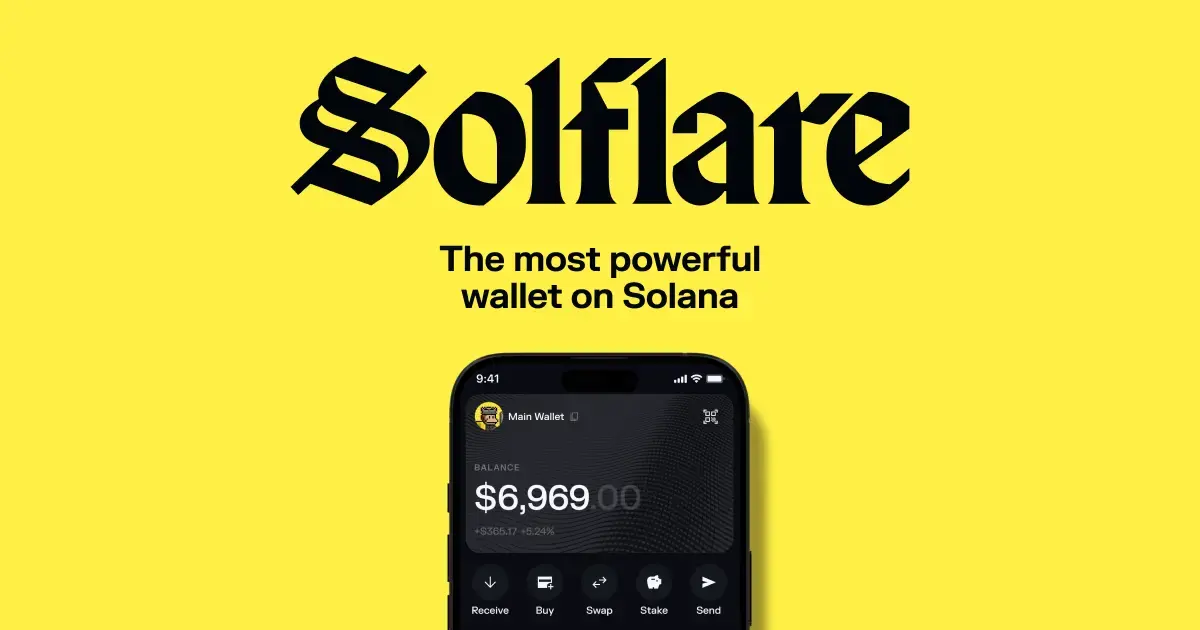
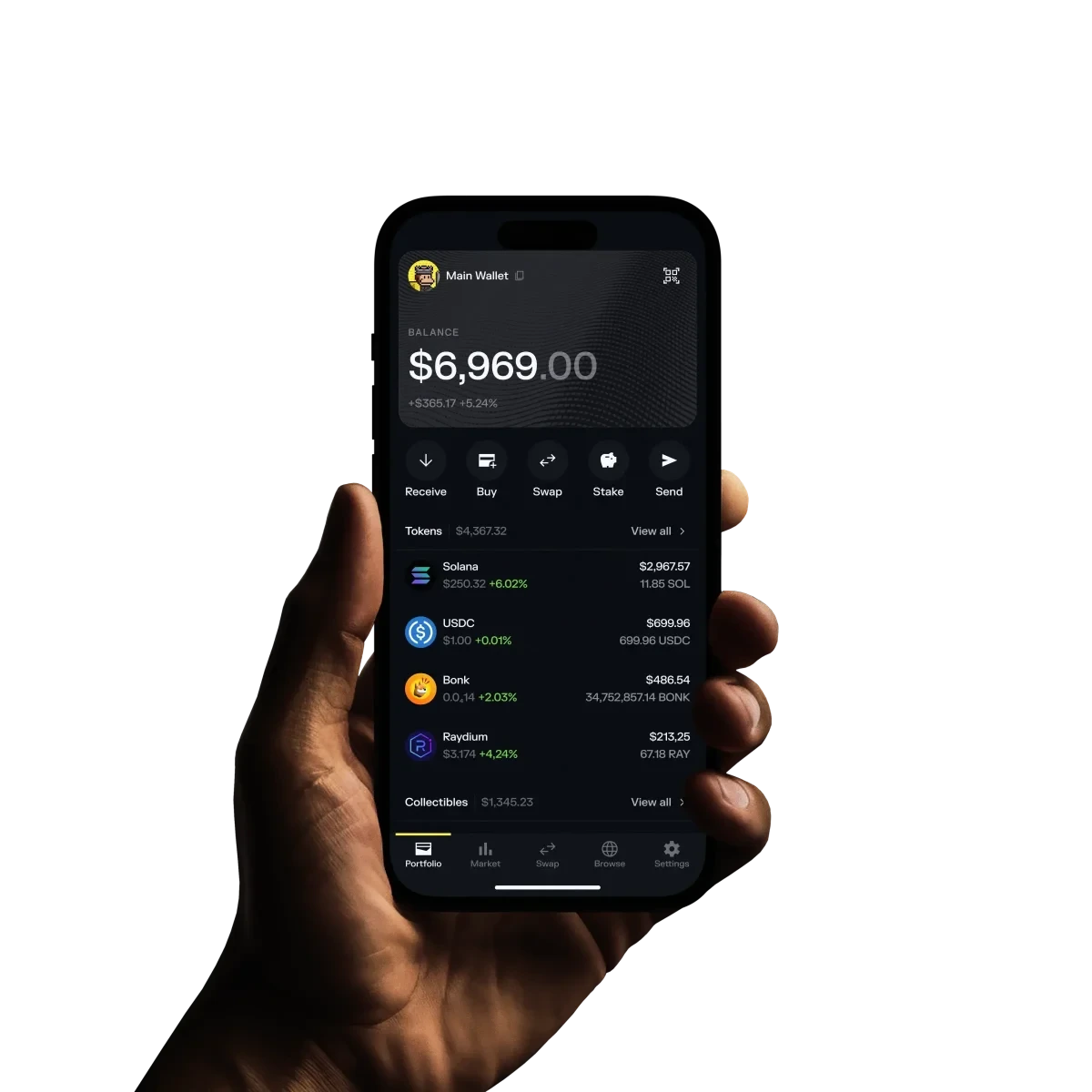
Solflare wallet is designed around that high-frequency pattern. Balances, token prices, staking positions, and app connections belong in one place because Solana users switch quickly between holding, trading, and interacting with protocols. The wallet does the signing, displays the transaction request, and uses the account's SOL balance to pay network fees.
How staking SOL works inside the wallet
Staking is one of the clearest reasons people choose a dedicated Solana wallet. When a user stakes SOL, the tokens are delegated to a validator that participates in securing the network. The account keeps ownership of the stake, and rewards accrue through Solana's staking system rather than through a lending desk or a pooled exchange balance.
Inside Solflare wallet, staking turns validator selection, delegation, reward tracking, and unstaking into a guided workflow. The important details are still real: validator performance, commission, and activation timing affect the staking experience. Unstaking follows Solana's epoch-based process, so funds do not behave like an instant swap once a stake account is deactivated.
Trading, token prices, and SPL asset management
Solana uses SPL tokens for assets such as USDC, JitoSOL, BONK, and countless project tokens. A wallet has to make those assets readable without burying the user in raw token accounts. Solflare wallet brings holdings, market movement, and transaction signing into the same interface, which reduces the back-and-forth between a block explorer, a price site, and a separate signing tool.
The trading flow matters because Solana markets move quickly. A user reviews the token, route, amount, expected output, and approval request before signing. The wallet's job is to make the request understandable enough that the user recognizes whether they are approving a normal swap, connecting to a dApp, or granting a permission that deserves closer attention.
Security features around keys, approvals, and Shield
Self-custody starts with private keys. The recovery phrase controls the account, and losing it means losing practical access to the assets tied to that account. The wallet interface can reduce mistakes by separating sensitive backup steps from everyday actions, making signature requests legible, and highlighting risky interactions before the user signs.
Typically, Solflare also presents Shield as a hardware wallet product, which fits users who want key storage separated from an internet-connected phone or browser. Hardware signing is especially useful for larger SOL balances, long-term staking, and accounts that interact with DeFi contracts. A single caution belongs here: never type a recovery phrase into a site, chat, bot, or form that appears after a support message.
Getting from install to first Solana transaction
New users start by installing the extension or downloading the mobile app, creating an account, and backing up the recovery phrase before adding funds. SOL is required for transaction fees, so even users who mainly hold USDC or another SPL token need a small SOL balance before moving assets or interacting with apps.
- Create or import the account and store the recovery phrase offline.
- Add SOL through an exchange withdrawal, wallet transfer, or supported buy flow.
- Confirm the public address before receiving funds from another account.
- Open the token view to check SPL balances and recent activity.
- Connect to a trusted Solana app only after reviewing the permission prompt.
Once funded, the first transaction is usually a small transfer or swap. That test confirms the address, the fee payment, and the signing flow before the account carries meaningful value.
Where the wallet fits in Solana Web3
A Solana account becomes more useful when it connects to the ecosystem around it. DeFi apps, NFT marketplaces, launchpads, games, token dashboards, and governance tools all rely on wallet signatures. The wallet does not need to hold every feature internally because connection standards let external apps request signatures while the user keeps control of the account.
That pattern is why wallet compatibility matters. On desktop, the browser extension handles most dApp sessions. On mobile, deep links and in-app browsing shape the experience. The same address can receive NFTs, hold SPL tokens, stake SOL, and sign governance votes, as long as the user keeps the recovery method secure and enough SOL is available for fees.
Cards, spending, and the bridge from chain to checkout
The official Solflare product set includes Cards, signaling a broader move from pure onchain storage toward everyday spending. For a Solana user, the value is continuity: assets begin in a self-custody account, transaction history remains visible, and the wallet interface becomes the place where holding, swapping, staking, and spending are coordinated.
Spending features deserve a different mental model from staking. A payment flow prioritizes speed, denomination, and availability at checkout, while staking prioritizes validator choice and reward accrual. Keeping those workflows near each other helps users understand which assets are liquid, which are delegated, and which transaction is about to leave the wallet.
Phantom, Backpack, and Ledger as nearby alternatives
Solana users commonly compare wallet options before committing. Phantom is widely used across Solana apps and has a polished multi-chain experience. Backpack is closely associated with the xNFT and Mad Lads ecosystem. Ledger hardware wallets provide offline key storage and pair with software interfaces for transaction signing. Solflare wallet stands out for its Solana-native focus, integrated staking emphasis, support resources, and product surface that extends into hardware and card features.
| Wallet option | Best fit | Concrete distinction |
|---|---|---|
| Solflare | Solana staking and active SPL token management | Built around Solana with staking, trading, Shield, Magic, and Cards in its product family |
| Phantom | Users who want broad dApp compatibility and multi-chain support | Popular browser and mobile wallet with strong Solana ecosystem recognition |
| Backpack | NFT and xNFT-focused Solana users | Known for app-like collectibles and the Mad Lads community |
| Ledger | Long-term storage with offline signing | Hardware device keeps private keys off the everyday computer or phone |
When Solflare wallet makes the most sense
It fits users who treat Solana as an active network rather than a single asset balance. Someone staking SOL, holding USDC, tracking token prices, exploring DeFi, and signing NFT or governance transactions benefits from a wallet that presents those actions in a Solana-specific way. The near-zero fee environment rewards frequent small actions, and the wallet gives those actions a consistent home.
In most cases, Solflare wallet also suits users who want human support and a security-forward product line without leaving the Solana ecosystem. The strongest setup is simple: maintain a secure backup, keep enough SOL for fees, review signature requests, and separate larger balances from experimental app interactions when the account grows.
Frequently asked questions about Solflare wallet
- Which token do I need for Solana transaction fees in Solflare?
- You need SOL for Solana transaction fees. SPL tokens such as USDC, BONK, or JitoSOL do not replace SOL as the fee-paying asset for ordinary Solana transactions. A small SOL balance keeps transfers, swaps, staking changes, dApp connections, and NFT actions from failing because the account lacks enough native gas to submit the transaction.
- Recovering access if I lose my phone with Solflare installed
- Access is recovered with the wallet's recovery phrase or compatible private key backup, not with the lost phone itself. Install the wallet on a new trusted device, choose the import or recovery option, and restore the account using the saved phrase. Anyone who has that phrase controls the account, so the backup should stay offline and private.
- Why does a Solflare transaction show a signature request before it runs?
- A signature proves that the account owner approved the requested action. Solana apps ask the wallet to sign transfers, swaps, staking changes, NFT listings, and permission changes. The transaction runs only after approval. Reviewing the prompt matters because the signature is the point where a displayed request becomes an onchain instruction tied to the wallet address.
- What fees do I pay when staking SOL from Solflare?
- Staking SOL from Solflare uses normal Solana network fees, paid in SOL, for actions such as creating a stake account, delegating, deactivating, or withdrawing. Validators also set a commission that comes out of staking rewards before rewards reach delegators. The wallet interface shows the transaction request, while the network and validator rules determine the final fee and commission behavior.