Honest, useful guides
Solflare is a Solana wallet built for SOL staking, swaps, and everyday spending
Solana wallet for holding, trading, and staking SOL, with built-in cards that let users spend from chain to checkout in the same app.
Solflare is a self-custody wallet for the Solana network, giving users one place to hold SOL, manage SPL tokens, stake with validators, trade through in-app routes, view NFTs, and use card features that connect on-chain balances to real-world checkout. It runs as a mobile app and browser extension, so the same wallet account travels between DeFi, token transfers, staking screens, and Solana apps.
Where the wallet fits in a Solana day
A Solana user spends most of their time moving between balances, swaps, staking, dApps, and security prompts. This wallet brings those actions into a single interface instead of spreading them across separate tools. It is designed around SOL as the network asset, SPL tokens as the token standard, and fast transactions that settle with small network fees.
The experience matters because Solana activity moves quickly. A user checking a new token, sending USDC, connecting to a marketplace, or claiming staking rewards needs clear signing screens and accurate account context. Solflare puts account balances, token prices, staking positions, NFTs, and transaction approval flows close together so each action starts from a known wallet state.
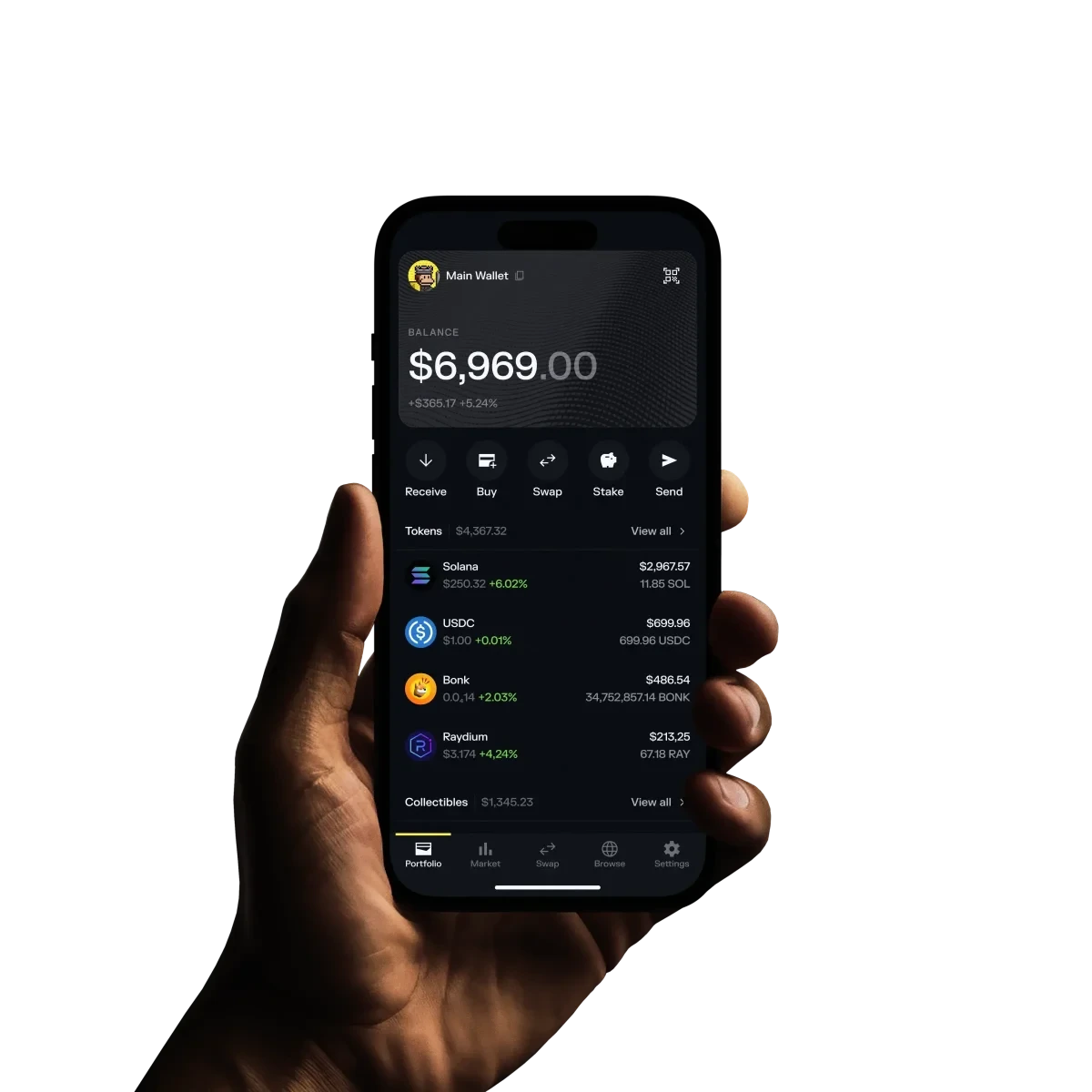
Holding SOL, SPL tokens, and NFTs in one account
At its base, the wallet stores keys that control Solana addresses. Those addresses hold SOL for fees and staking, plus SPL assets such as USDC and project tokens. It also displays Solana NFTs, so collectibles and profile assets appear beside liquid balances rather than in a separate gallery-only tool.
Because the wallet is self-custodial, the recovery phrase and private keys decide access. The app signs transactions locally through the wallet account, then broadcasts them to the network. That structure gives the user direct control over assets while making key backup and device security part of normal wallet ownership.
How SOL staking works inside the app
Staking turns idle SOL into delegated stake with a validator. The wallet guides the user through choosing a validator, creating a stake account, delegating SOL, and tracking the position afterward. Rewards accrue through Solana's proof-of-stake system, and the wallet surfaces the stake state so the user sees whether funds are active, activating, deactivating, or ready to withdraw.
Validator choice still matters. Commission, uptime, reputation, and decentralization all affect the quality of a staking decision. Solflare gives the staking workflow a dedicated place in the product, which keeps staking from feeling like an advanced command-line task. The user does not need to operate validator infrastructure; delegation uses the normal wallet approval flow.
Swaps, market data, and trading screens
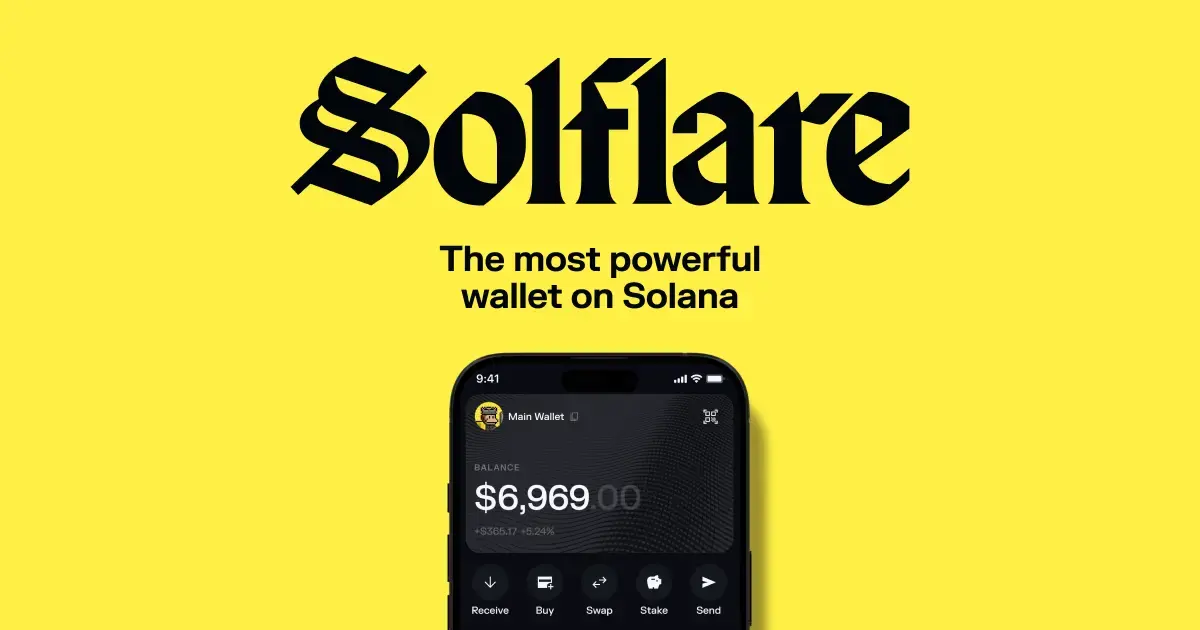
Trading in the wallet centers on Solana-native tokens and routes available through the ecosystem. The interface shows live market information, token prices, and swap controls, then asks the user to review the receiving asset, estimated output, price impact, and transaction details before signing. This is especially important on Solana, where new tokens appear constantly and symbols alone do not prove legitimacy.
Good wallet trading is less about a flashy chart and more about reducing avoidable mistakes. Token contract identity, decimal handling, slippage, and approval prompts all shape the final trade. Solflare combines price discovery and transaction signing in the same flow, which shortens the distance between research and execution while still leaving the final signature under the user's control.
Cards take balances from chain to checkout
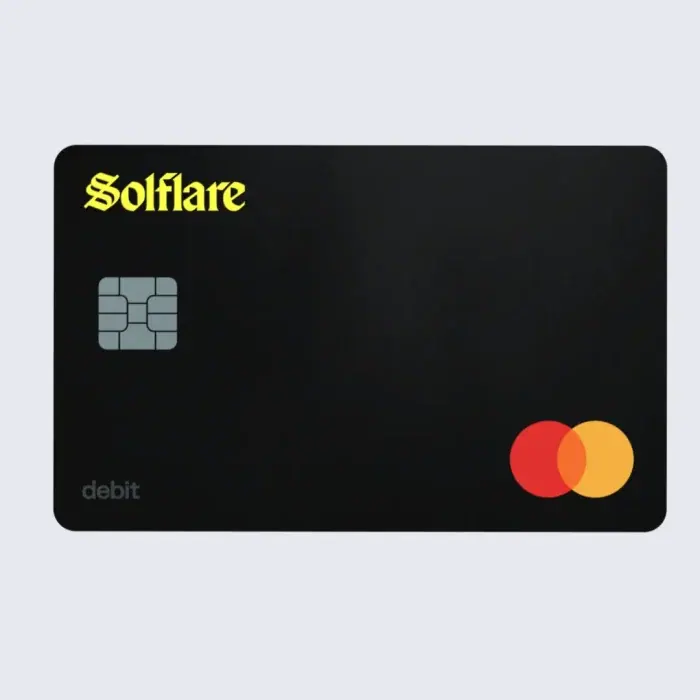
The card feature is the bridge between crypto balances and everyday payments. It gives the wallet a spending layer, so assets are not limited to transfers, swaps, or DeFi interactions. A user who wants a single Solana-focused app for holding, staking, trading, and spending gets a more complete financial workflow than a wallet that only signs dApp transactions.
This is the most distinctive part of the product for users who treat crypto as something they actually use. The same account context that shows SOL, tokens, and staking also supports card access, turning the wallet into a place where portfolio management and checkout sit side by side.
Security features for signatures and hardware wallets
Security starts with clear transaction signing. A wallet should show what account is connecting, what action is being requested, and what assets are affected. On Solana, malicious links and fake support messages remain a real threat, so seed phrases belong only in wallet recovery screens controlled by the wallet app itself.
Hardware wallet support adds another layer for larger balances. Solflare includes Shield, described as a hardware wallet feature, for users who want stronger separation between daily browsing and key approval. Hardware signing is useful when a wallet interacts with DeFi protocols, NFT marketplaces, token mints, and unfamiliar web apps because the final approval requires a dedicated device path.
Magic, support, and the app experience
The product also includes Magic, an AI assistant, along with app guides, token price tools, and human support. These extras matter for onboarding because Solana has its own vocabulary: rent, priority fees, stake accounts, SPL tokens, address lookup tables, and compressed NFTs all appear across the ecosystem. A wallet that explains actions inside the flow reduces confusion without forcing the user to leave the app.
Mobile and extension access cover different habits. The extension works well for desktop DeFi and marketplace sessions, while the mobile app suits QR flows, transfers, balance checks, and card use. Keeping the same wallet available in both places makes the account portable without changing the underlying Solana address.
Getting started with a new wallet account
A new user begins by installing the mobile app or browser extension, creating a wallet, and saving the recovery phrase offline. After funding the address with SOL, the wallet becomes ready for network fees, transfers, swaps, and staking. Small first transactions are useful because they show how Solana confirmations, fee deductions, and wallet notifications behave before larger balances enter the account.
- Create or import a wallet account in the app or extension.
- Back up the recovery phrase in a private offline location.
- Add SOL to cover transfers, swaps, staking, and account activity.
- Review token addresses before trading unfamiliar SPL assets.
- Disconnect sites that no longer need wallet access.
Once the account is funded, the user can stake SOL, explore Solana apps, receive NFTs, trade tokens, or set up card features from the same wallet environment. Solflare is strongest for someone who wants Solana-first depth rather than a wallet built mainly around Ethereum and adapted later for other chains.
Phantom, Backpack, and other Solana wallet choices
Solana users also look at Phantom, Backpack, and Glow when choosing a wallet. Phantom is widely used across Solana dApps and supports multiple chains. Backpack is associated with xNFT-style app experiences and a more developer-forward ecosystem. Glow focuses on a clean Solana wallet experience with simple signing and asset management.
Solflare stands out through its focused mix of SOL staking, trading tools, cards, hardware wallet features, AI assistance, and support. The right choice depends on how the wallet will be used: frequent DeFi sessions, long-term staking, NFT activity, mobile spending, or hardware-backed storage. Many experienced users keep more than one wallet, separating daily experimentation from long-term holdings.
Solflare: questions and answers
What fees do users pay when sending SOL from the wallet?
Solana network fees apply when sending SOL, moving SPL tokens, swapping, staking, or interacting with apps. These fees are paid in SOL and are typically small compared with many older blockchain networks. Swap quotes also include route pricing and any liquidity-related cost shown in the trade preview, so the final review screen matters before signing a transaction.
Does the wallet support both mobile and browser extension use?
Yes. The product is available as a mobile app and a browser extension, which fits two common Solana workflows. The extension is useful for desktop dApps, NFT marketplaces, and DeFi dashboards. The mobile app is better for transfers, QR-style actions, balance checks, card access, and managing assets while away from a computer.
Can I recover access if my phone or laptop is lost?
Access depends on the recovery phrase created when the wallet account was set up. If that phrase is stored correctly, the account can be restored on a new compatible wallet installation. If the recovery phrase is lost and no other authorized device remains available, the wallet provider cannot recreate the private keys for the user.
Which assets should be kept in the account for basic activity?
SOL is the essential asset because it pays Solana network fees and is also used for staking. Users commonly hold SPL tokens such as USDC alongside SOL, plus NFTs or other Solana-based assets. Keeping a small SOL balance available helps prevent failed transfers or swaps caused by having tokens but no gas asset for transaction fees.
Is a hardware wallet worth using with this wallet?
A hardware wallet is worth considering when the account holds meaningful balances, long-term SOL stake, valuable NFTs, or assets used across many dApps. It separates key approval from the everyday browser or phone environment. That extra step slows signing slightly, but it gives stronger protection against risky connections and rushed transaction approvals.
What happens if a swap shows the wrong token symbol?
Token symbols are easy to copy, so the contract address and token details matter more than the displayed ticker. If a swap screen shows a symbol that looks familiar but the asset identity feels off, the safer move is to stop the trade and inspect the token information. Fake tokens rely on users approving transactions from symbol recognition alone.
Do I need a separate app to stake SOL?
No separate staking app is required for standard SOL delegation through this wallet. The staking flow lets the user choose a validator, delegate SOL, monitor the stake account, and later deactivate or withdraw through wallet screens. Advanced users still compare validator commission, uptime, and ecosystem contribution before deciding where to delegate.